LV8 / LR8 (Ququan / Spring at the Crook) Acupuncture Point Guide
Practitioner Guide from The Acupuncture Supply Co.
Professional acupuncture supplies and clinical reference material for qualified practitioners.
LV8 Ququan, also written LR8, lies at the inner end of the crease behind the knee. It is a different point from SP9 on the upper medial tibia. Keeping the knee comfortably flexed makes the crease and medial hamstring tendons easier to assess without treating a bony prominence as the target.
Practitioner only. This is an educational reference, not a self-needling guide.
LV8 Ququan quick reference
| Point name | LV8 — Ququan (Spring at the Crook) |
|---|---|
| Other names / codes | LR8, LIV8 |
| Channel | Liver channel of Foot Jueyin |
| Classification | He-Sea and Water point |
| Region | Medial end of the popliteal crease |
| Laterality | Bilateral |
| Core landmark | Medial knee-crease depression beside the semitendinosus and semimembranosus tendons. |
Location of LV8 Ququan
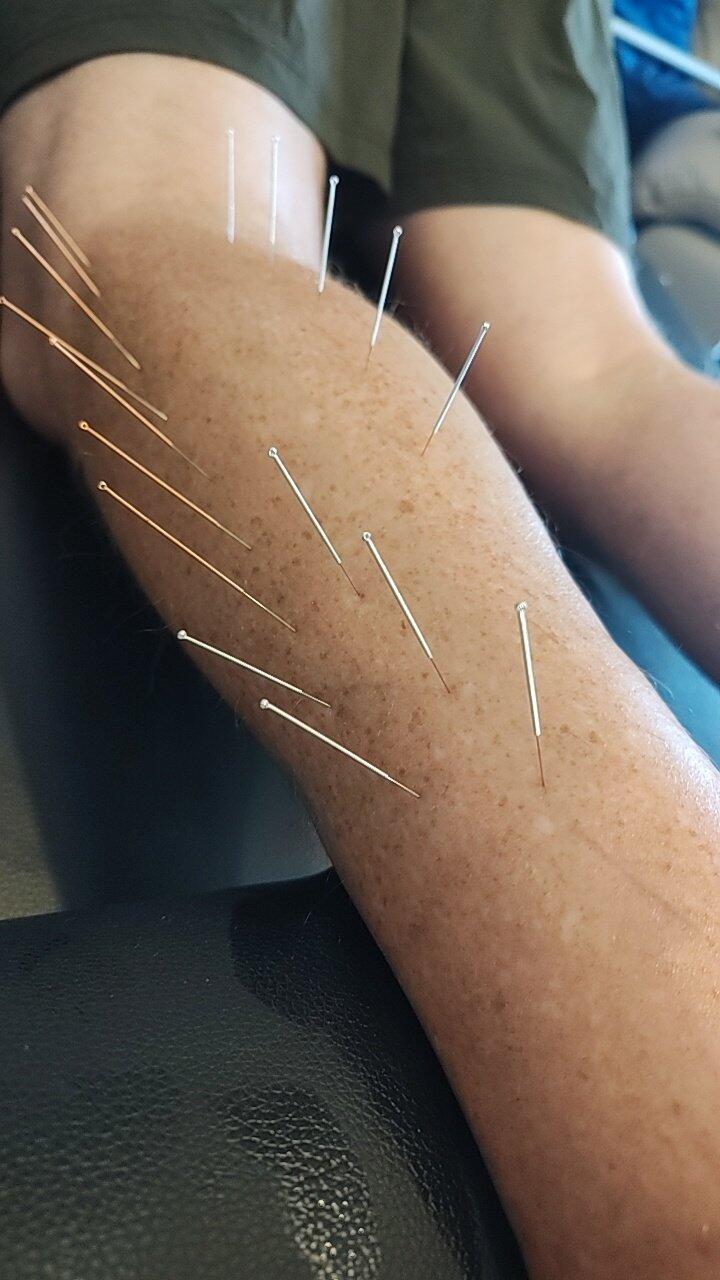
Flex and support the knee. At the medial end of the popliteal crease, identify the prominent medial hamstring tendons. LV8 is in the depression medial to the semitendinosus and semimembranosus tendons at this crease level. Use the soft-tissue hollow rather than a point lower down on the tibia.
Landmark checks
- Confirm that the view is the inner, or medial, side of the knee.
- Identify the end of the posterior knee crease with the knee flexed.
- Keep LV8 distinct from SP9 below the medial tibial condyle and from the central popliteal region.

Traditional functions of LV8
- Traditionally nourishes Liver Blood and Yin in appropriate patterns.
- Associated with clearing Damp-Heat from the lower Jiao.
- Used locally to address restriction along the medial knee region.
These terms belong to traditional acupuncture theory. They should be distinguished from evidence about clinical outcomes.
Traditional clinical applications
Traditional uses include medial knee discomfort and selected lower-abdominal or genitourinary presentations. These broad traditional categories require diagnosis and do not establish treatment for infection, urinary retention or a gynaecological condition. Local knee swelling also needs an explanation before treatment is considered.
Common point combinations
- LV8 + LV3: a same-channel pairing considered according to the Liver pattern being addressed.
- LV8 + SP6: a traditional pairing discussed for Blood, Yin or lower-Jiao patterns, with pregnancy and other patient factors assessed separately.
These are traditional treatment-planning examples, not fixed prescriptions. Assess each point separately and select a combination only when it fits the full presentation and your training.
Anatomy and practitioner notes
Medial hamstring tendons and neighbouring soft tissues provide the surface reference. Major neurovascular structures run through the central popliteal region. A medial surface point should not be treated as a direction to advance towards the centre of the knee. Surgery, a suspected cyst or new swelling changes the assessment.
Needling and essential safety
Avoid directing a needle towards the central popliteal neurovascular bundle. Do not needle an unexplained mass or a hot, swollen knee. New unilateral calf swelling or pain needs prompt medical assessment; associated breathlessness or chest pain is an emergency. Review joint surgery, bleeding risk, skin condition and altered sensation.
Technique must follow individual anatomy and accredited training. Use sterile, single-use needles and suitable infection-control measures. Review health history, medicines, skin condition and consent before treatment.
Frequently asked questions
Are LV8 and LR8 duplicates?
They are two abbreviations for the same Liver-channel point, Ququan. Project Lotus uses one guide covering both names.
Is Ququan the same point as SP9 Yinlingquan?
No. LV8 is at the medial knee crease beside the hamstring tendons; SP9 uses a landmark lower down beside the medial tibial condyle.
Is this a guide to self-needling?
No. Needling requires appropriate professional training, anatomical assessment and a safe clinical setting.
Continue exploring Project Lotus
Read the LV3 guide and SP9 guide, or browse all Acupuncture Point Guides.
For clinic supplies, browse our professional acupuncture needles and the wider Practitioner Guides.
Professional reference: Written for qualified acupuncture practitioners. Traditional functions and pairing examples describe a clinical tradition; they are not claims of proven efficacy for an individual point. The guide does not replace accredited training, diagnosis, informed consent or a patient-specific treatment plan. Surface illustrations cannot determine safe needle depth or direction.
References and further reading: eLotus CORE: Ququan (LV8); WHO Standard Acupuncture Point Locations, 2008; revised reprint 2009; NCCIH: Acupuncture — Effectiveness and Safety; NHS: Complementary therapies and safety. Accessed 18 September 2026.