SI2 (Qián Gǔ 前谷 / Front Valley) Acupuncture Point Guide
Practitioner Guide from The Acupuncture Supply Co.
SI2 Qián Gǔ belongs to the Small Intestine channel. This Project Lotus guide focuses on reliable surface landmarks, nearby-point distinctions and safe professional assessment.
Quick reference
| Point | SI2 — Qián Gǔ |
|---|---|
| Channel | Small Intestine — Hand Taiyang |
| Traditional classification | Ying-Spring; Water |
| Region | Ulnar little-finger base |
| Laterality | Bilateral |
Location and landmark sequence
On the outer little-finger border, find the hollow immediately beyond the little-finger knuckle towards the fingertip, at the skin boundary.
- Support the limb so the illustrated surface is accessible. Confirm the thumb or little-finger side for hand and forearm points, or the inner or outer ankle for foot points.
- Palpate the named joint, bone or tendon landmarks before estimating a position.
- On the outer little-finger border, find the hollow immediately beyond the little-finger knuckle towards the fingertip, at the skin boundary.
- Check the relationship to nearby points and reassess on the individual patient.
Distinguishing nearby points
SI2 is distal to the fifth MCP joint. SI3 lies on the wristward side. Confirm with the hand slightly flexed.
Traditional context
Ying-Spring; Water is the traditional classification used here. Classification helps organise channel theory; it is not evidence that an individual point treats a particular disease. Selection depends on a complete assessment and a coherent treatment principle.
Traditional functions and applications
Within traditional East Asian medicine, this point is described in terms of wind-heat clearing; channel activation.
Historically considered for selected ear, throat and eye presentations, alongside local finger symptoms. These are historical treatment concepts, not proven disease-specific effects of this point alone. Select points from the full assessment rather than a symptom list.
Moxibustion
Moxa is not an automatic addition. Assess the treatment principle, skin condition and sensation; use appropriate training, supervision and burn prevention if heat is considered.
Anatomy and essential safety
Small digital vessels, sensory branches, tendons and joint structures are close together in the hand. Inspect skin, circulation and sensation, and account for arthritis, injury or surgery.
- Inspect skin, circulation and sensation; avoid infected, ulcerated or otherwise unsuitable tissue.
- Review relevant medication, bleeding risk, pregnancy, surgery and previous reactions.
- Use sterile single-use needles, appropriate infection control and safe sharps disposal.
- Choose depth, angle and stimulation through accredited training and patient-specific anatomical assessment.
When assessment takes priority
A hot swollen limb with fever, new weakness, persistent numbness, significant trauma or an infected wound needs medical assessment. Acute chest pain, collapse or severe breathlessness requires emergency care; a traditional channel association must never delay referral.
Frequently asked questions
Can the image replace palpation?
No. Confirm each landmark on the patient. Body proportions and the visibility of tendons vary.
Does the guide give a needling depth?
No universal depth is supplied. A surface marker cannot show the safe relationship to deeper nerves, vessels or joints.
Can this be used for self-needling?
This material is for qualified practitioners and does not replace professional training.
Needles for your clinic
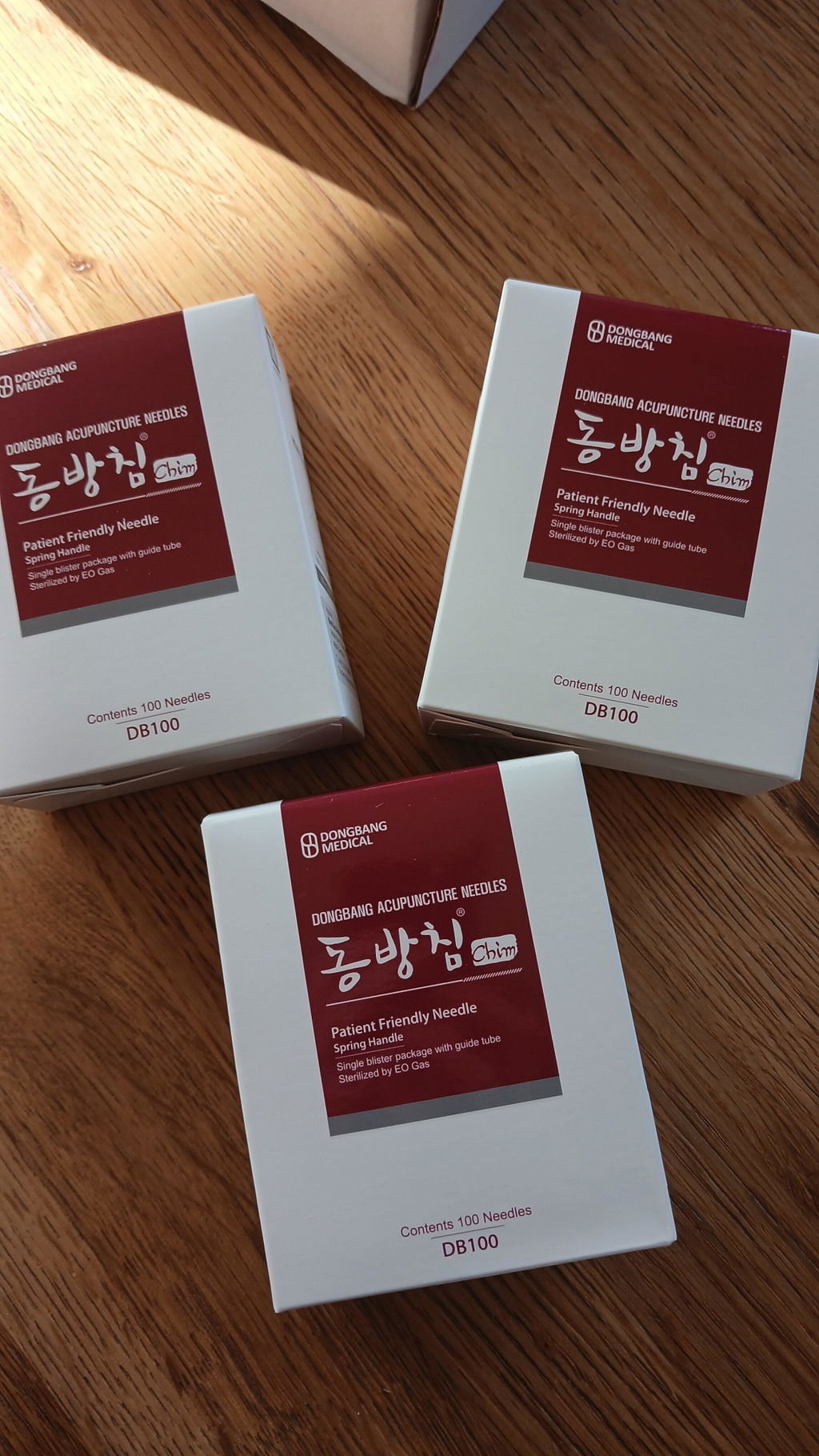
Compare DONGBANG acupuncture needles with guide tubes and ORCA Silver Handle acupuncture needles. Check the available sizes and pack details on each product page when choosing supplies for your practice.
Prefer a larger box? Compare DONGBANG DB106 acupuncture needles in a 1,000-pack with 10 needles per blister.
Continue exploring Project Lotus
Explore our acupuncture point guides or browse professional acupuncture needles.
References: Joel Penner, American Dragon: traditional reference for SI2; CEIMEC point atlas: SI2; WHO Standard Acupuncture Point Locations (2009 reprint), entry SI2; NCCIH: acupuncture effectiveness and safety. Location references checked 12 October 2026. WHO landmarks take precedence where atlas descriptions differ.