SP8 (Dì Jī 地机 / Earth Pivot) Acupuncture Point Guide
Practitioner Guide from The Acupuncture Supply Co.
SP8 Diji is a xi-cleft point of the Spleen channel. This Project Lotus reference brings together surface landmarks, traditional theory and practical safety considerations for qualified practitioners.
Quick reference
| Point | SP8 — Diji (Earth Pivot) |
|---|---|
| Channel | Spleen — Foot Taiyin |
| Classification | Xi-Cleft |
| Region | Medial lower leg |
| Laterality | Bilateral |
| Location | On the inner lower leg, just behind the medial tibial border, 3 B-cun distal to SP9. |
Location of SP8 Dì Jī 地机
On the inner lower leg, just behind the medial tibial border, 3 B-cun distal to SP9.
Landmark sequence
- Expose the inner knee and lower leg.
- Locate SP9 below the medial tibial condyle.
- Measure three proportional units distally along the posterior edge of the medial tibial border.
- Palpate the soft-tissue hollow beside the bone.
Where a B-cun measurement is given, use the patient’s proportional body measurement. It is not a fixed centimetre distance or a universal number of the practitioner’s finger breadths. Confirm the relevant landmarks by palpation before deciding on a technique.
Landmark schematic; not to scale and not a guide to insertion depth. Confirm placement on the individual patient.
Distinguishing nearby points
Measure SP8 from SP9, not from the knee crease alone. Keep the point behind the medial tibial border rather than over the tibial surface.
Traditional functions
Within traditional East Asian medicine, this point is commonly described in terms of the following functions:
- Regulates menstruation in traditional theory
- Invigorates and harmonises Blood
- Resolves Dampness and eases pain
Traditional applications
Traditionally considered for menstrual pain or irregularity associated with Blood Stasis and for selected Spleen-channel or Damp presentations. Menstrual symptoms require appropriate medical screening.
These descriptions express traditional theory. They are not claims that this individual point has been proven to prevent or cure a medical condition. A symptom or channel label alone is insufficient to select a treatment.
Planning a point combination
Consider the treatment principle, local versus distal selection and the patient’s complete presentation. Related Project Lotus guides for comparison include SP6, SP10. These are educational comparison points, not a fixed prescription. Confirm the rationale, laterality and technique within accredited training.
Anatomy and essential safety
The medial tibial region includes superficial saphenous vessels and nerve branches, with deeper muscular and neurovascular structures. Avoid visible veins, bone contact and unsuitable swollen tissue.
- Inspect the skin and assess local tissue, circulation and sensation. Do not needle through infected, ulcerated, inflamed or otherwise unsuitable tissue.
- Review relevant surgery, injuries, implants, bleeding risk, medication, pregnancy and previous adverse reactions.
- Use sterile single-use needles, appropriate infection control and safe sharps disposal. Obtain informed consent and document the treatment.
- Choose angle, depth and stimulation from anatomical assessment and accredited training. This guide gives no universal insertion depth. Stop and reassess unexpected sharp pain, neurological symptoms or a concerning response.
When medical assessment takes priority
Heavy bleeding with faintness, bleeding in possible pregnancy, or postmenopausal bleeding needs medical assessment; severe bleeding or collapse is urgent.
Moxibustion
Moxa is not an automatic addition. Consider the traditional pattern, local anatomy and the practitioner’s training. Where heat is appropriate, assess sensation, skin condition, ventilation and the patient’s ability to report discomfort; supervise continuously and prevent burns.
Research note
Evidence concerning an acupuncture treatment or a multi-point protocol cannot be assigned automatically to this point alone. This guide does not claim an independently established clinical effect for SP8. Traditional functions and clinical evidence should be discussed separately.
Frequently asked questions
Is this point bilateral?
Yes. The surface landmarks apply on both sides. Treatment laterality depends on assessment and the chosen clinical strategy.
Can the image replace palpation?
No. The image shows the landmark relationship schematically. Body proportions, tendon visibility and tissue depth vary, so trained examination remains essential.
Is this a self-needling guide?
No. It is an educational reference for qualified practitioners and does not replace professional training or medical assessment.
Needles for your clinic
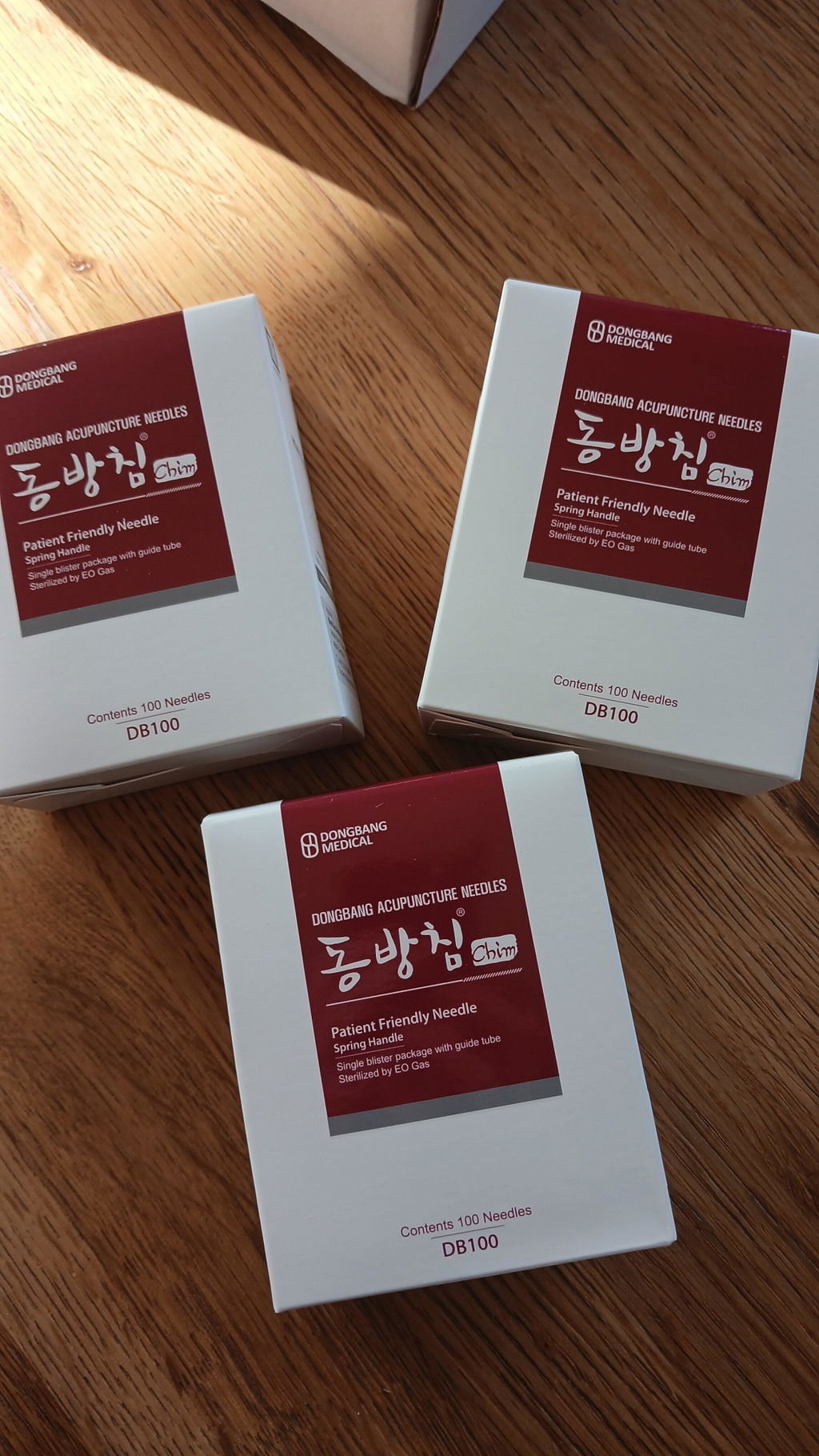
Compare DONGBANG acupuncture needles with guide tubes and ORCA Silver Handle acupuncture needles. Check the available sizes and pack details on each product page when choosing supplies for your practice.
Prefer a larger box? Compare DONGBANG DB106 acupuncture needles in a 1,000-pack with 10 needles per blister.
Continue exploring Project Lotus
Browse our Acupuncture Point Guides and professional acupuncture needles.
Professional note: Educational material for qualified acupuncture practitioners. Individual assessment, consent, safe technique and appropriate referral remain the practitioner’s responsibility.
References: WHO Standard Acupuncture Point Locations, updated reprint 2009 (entry SP8); CEIMEC point atlas (cross-check; WHO takes precedence where descriptions differ); Joel Penner, American Dragon: traditional point reference; NCCIH: acupuncture evidence and safety. Checked 5 October 2026.